
Your liver is a 3-pound chemical processing plant.
It filters toxins. Metabolizes fats. Produces bile. Stores vitamins. Regulates blood sugar.
And it does this every single day… without you even thinking about it.
Until something goes wrong.
Because here’s what most people don’t realize:
Your liver doesn’t complain until it’s already in trouble.
By the time you feel sluggish, bloated, or notice your bloodwork’s off…
Your liver has been struggling for MONTHS.
Maybe even years. The good news?
Your liver is one of the most resilient organs in your body.
Give it the right support… And it can regenerate and rebuild itself.
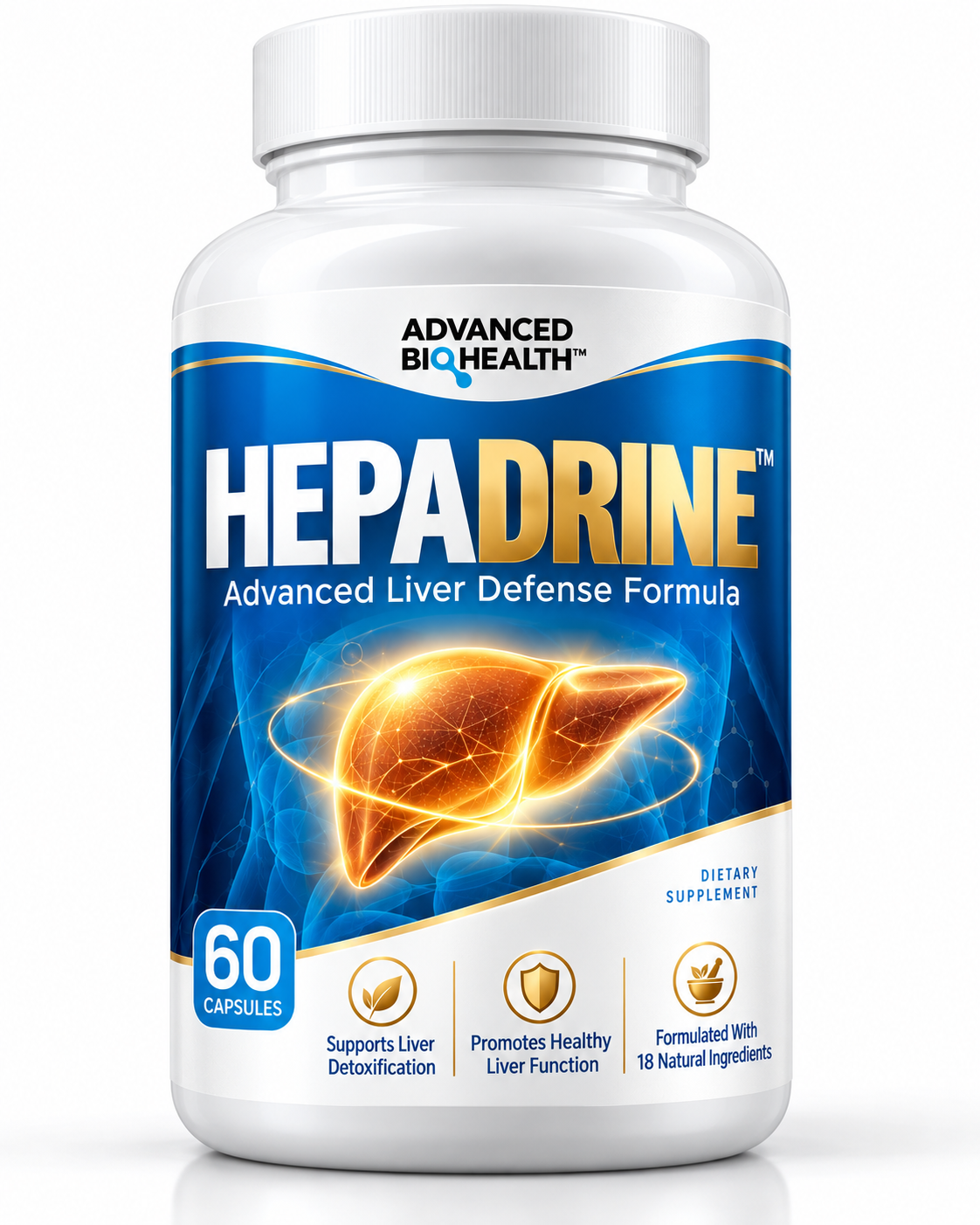
That’s exactly what Hepadrine was designed to do.
22 Research-Backed Ingredients. One Comprehensive Formula.
Most liver supplements are a joke. They slap 100mg of milk thistle on the label and call it “liver support.”
Hepadrine doesn’t play that game.
We built this formula around actual clinical research…
Using ingredients that have been studied in human trials, animal models, and traditional medicine for DECADES.
Here’s what’s inside — and the science that backs it up:
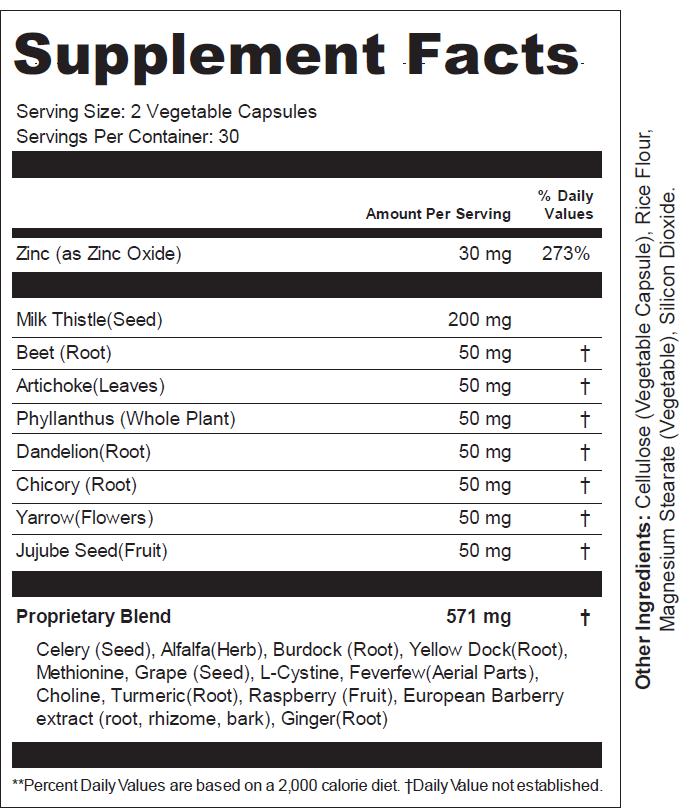
Zinc (30mg) – The Liver’s Essential Mineral
This isn’t just “zinc.”
It’s 30mg of zinc oxide — the exact dose used in a randomized, double-blind, placebo-controlled trial that showed significant reductions in AST levels in adults with non-alcoholic fatty liver disease (NAFLD).¹
In that 8-week study, participants taking 30mg of zinc daily saw measurable improvements in liver enzyme markers compared to placebo.
Zinc is essential for antioxidant defense.
It’s required for hundreds of enzymatic reactions in the liver.
And zinc deficiency is shockingly common in people with chronic liver issues.
A 2020 meta-analysis published in World Journal of Hepatology reviewed multiple trials in cirrhosis patients and concluded that zinc supplementation improved clinical outcomes, disease severity, and even mortality measures.²
That’s not marketing hype.
That’s peer-reviewed science.
Milk Thistle Seed (200mg) – The Gold Standard Liver Herb
Milk thistle is the most studied liver botanical on the planet.
Its active compound — silymarin — has been tested in over 200 clinical studies.
Here’s just a sampling:
A U.S. multicenter Phase II randomized, double-blind, placebo-controlled trial tested standardized silymarin (420–700mg/day) in patients with non-cirrhotic NASH.³
Results? Measurable benefits in liver enzyme levels and inflammation markers.
Another randomized controlled trial showed improvements in liver histology and enzyme levels in NASH patients.⁴
A classic 1989 RCT demonstrated silymarin’s protective effects in cirrhosis patients.⁵
Even in chronic hepatitis B and C, silymarin has shown benefits in multiple human trials.⁶⁻⁷
We’re using pure milk thistle seed powder at a clinically relevant 200mg dose.
Artichoke Leaf (50mg) – Clinically Proven in Fatty Liver Patients
Artichoke isn’t just a fancy vegetable.
It’s a clinically validated liver-support botanical.
Multiple randomized, placebo-controlled trials have tested artichoke leaf extract in patients with fatty liver disease:
The “SteatoChoke” trial was a randomized, placebo-controlled study in bariatric surgery patients.
Results? Artichoke leaf extract reduced liver steatosis, chronic inflammation, and liver size.⁸⁻⁹
A 12-week randomized trial in NAFLD patients found that artichoke combined with metformin or vitamin E improved liver ultrasound findings and biochemical markers.¹⁰
A double-blind RCT in NASH patients reported improved ALT and AST levels.¹¹
Artichoke works by supporting healthy bile flow and fat metabolism.
And we include 50mg in every serving.
Turmeric Root – Proven in Human MASLD Trials
Turmeric (specifically its active compound curcumin) has some of the strongest human evidence of any botanical in this formula.
Here’s what the research shows:
A 12-month randomized, double-blind, placebo-controlled trial tested 1,500mg/day of curcuminoids in 78 adults with type 2 diabetes and metabolic dysfunction-associated steatotic liver disease (MASLD).
The study evaluated reductions in hepatic steatosis and liver stiffness.¹²
A triple-blind RCT found that curcumin prevented tamoxifen-induced NAFLD in breast cancer patients.¹³
A 16-week double-blind RCT using 80mg/day of nano-curcumin improved liver fibrosis, steatosis, and function tests in NAFLD-associated fibrosis patients.¹⁴
Turmeric is included in our proprietary blend because it’s one of the most anti-inflammatory, antioxidant-rich botanicals on Earth.
Grape Seed Extract – Drops ALT by 30% in 8 Weeks
A double-blind, randomized, placebo-controlled trial in 50 NAFLD patients tested grape seed extract at 520mg/day for 8 weeks.
Results?
ALT dropped from 34.9 to 24.3 (p < 0.001).
AST dropped from 21.4 to 18.8 (p = 0.02).¹⁵
Grape seed extract is loaded with proanthocyanidins — powerful antioxidants that protect liver cells from oxidative stress.
We include grape seed extract in our proprietary blend for exactly this reason.
Ginger Root – Proven in Type 2 Diabetes + NAFLD Trial
A double-blind, placebo-controlled RCT in 76 patients with type 2 diabetes and NAFLD tested ginger powder at 1,000mg twice daily for 3 months.
The ginger group showed significant improvements in transaminase levels (liver enzymes).¹⁶
Another randomized trial in obese children with NAFLD found ginger plus an anti-inflammatory diet to be effective.¹⁷
Ginger isn’t just for nausea.
It’s a research-backed liver-support herb.
Chicory Root (50mg) – Reduces Liver Enzymes in Human Trial
A 12-week double-blind randomized trial in approximately 60 NAFLD patients tested chicory seed extract.
Result? Significant reductions in liver enzymes vs. placebo.¹⁸
Chicory has also been tested in multiple animal models of CCl4-induced liver damage and consistently shows protective effects.¹⁹⁻²¹
We include 50mg of chicory root in every serving.
Phyllanthus (50mg) – Tested in NASH-Risk Patients
A Phase II randomized, double-blind, placebo-controlled trial tested a combination of Phyllanthus niruri + milk thistle in patients at risk of NASH.
Results showed hepatoprotective benefit.²²
Phyllanthus has been used in Ayurvedic medicine for liver support for centuries…
And now there’s human trial data to back it up.
Dandelion Root (50mg) – Protects Against Acute-on-Chronic Liver Failure
In rats with acute-on-chronic liver failure, dandelion root extract showed significant protective effects.²³
It also protected against CCl4-induced liver toxicity in multiple animal studies.²⁴
Dandelion has been used traditionally as a “liver tonic” for hundreds of years…
And modern research is finally catching up.
Beet Root (50mg) – Rich in Betaine, a Methyl Donor
Beets are one of the richest natural sources of betaine — a compound that helps the liver metabolize fats.
In diabetic rats, beetroot extract prevented hepatic steatosis (fatty liver) and liver damage through antioxidant and metabolic pathways.²⁵
Betaine also protected against fulminant liver failure in mice exposed to LPS/galactosamine.²⁶
We include 50mg of beet root powder in every dose.
Jujube Seed (50mg) – Anti-Fibrosis Effects in Rats
A 2026 study found that jujube seed powder and seed oil alleviated CCl4-induced liver fibrosis in rats.
The researchers linked the effects to strong antioxidant activity (DPPH scavenging up to 90%) and high phenolic content.²⁷
Jujube has been used in Traditional Chinese Medicine for centuries…
And modern research is validating its liver-protective properties.
Yarrow Flowers (50mg) – Protects Against CCl4 Liver Toxicity
A rat study found yarrow extract protected against CCl4-induced liver toxicity.²⁸
Yarrow (Achillea millefolium) is a traditional European bitter herb used to support digestion and liver function.
Methionine + L-Cystine + Choline – The Glutathione Triad
Your liver’s #1 antioxidant is glutathione.
And these three nutrients are essential for making it:
Methionine is converted into S-adenosylmethionine (SAMe), which has been tested in multiple human trials for alcoholic liver disease.²⁹⁻³⁰
L-Cystine is a precursor to cysteine, which the liver uses to synthesize glutathione. The related compound N-acetylcysteine (NAC) is the FDA-approved antidote for acetaminophen overdose — the #1 cause of acute liver failure in the U.S.³¹⁻³²
Choline is essential for exporting fat from the liver. A randomized controlled trial tested phosphatidylcholine (2,400mg/day) in NAFLD patients and found improvements in oxidative stress and clinical outcomes.³³
These aren’t “filler” ingredients.
They’re foundational nutrients your liver NEEDS.
European Barberry Extract – Source of Berberine
Barberry’s active compound is berberine, which has been tested in multiple human trials for NAFLD and metabolic syndrome.
A randomized, double-blind, placebo-controlled trial assessed berberine’s effects on anthropometric, hepatic, and metabolic parameters in MASLD patients.³⁴
Berberine is one of the most researched plant compounds for metabolic health.
Plus: Celery Seed, Alfalfa, Burdock Root, Raspberry & More
We didn’t stop there.
Hepadrine also includes:
Celery Seed (activated Nrf2 antioxidant pathways in mice)³⁵
Alfalfa (protected against mercury-induced liver toxicity in rats)³⁶
Burdock Root (protected against CCl4 liver injury by suppressing inflammation and oxidative stress)³⁷
Raspberry (raspberry ketone ameliorated NAFLD in rats by activating AMPK)³⁸
Every ingredient was chosen for a reason.
Every dose was carefully balanced.
This isn’t a “kitchen sink” formula.
It’s a research-informed liver support system.
What You WON’T Find in Hepadrine
No artificial colors or flavors
No unnecessary fillers
No underdosed “pixie dust” ingredients
No sketchy stimulants or banned substances
Just clean, research-backed ingredients in a vegetable capsule.
How to Use Hepadrine
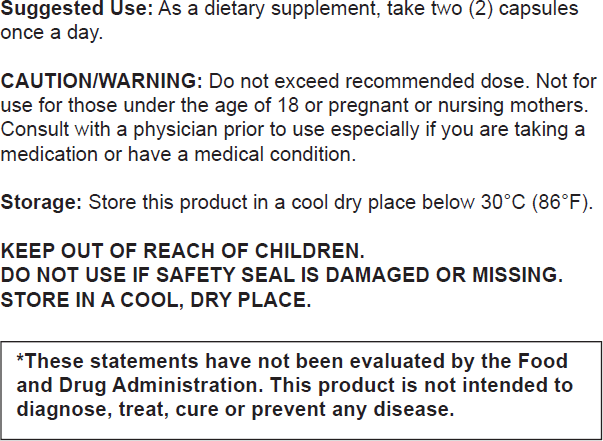
Take 2 capsules once daily with food.
Each bottle contains 60 capsules — a full 30-day supply.
For best results, use consistently as part of a healthy lifestyle that includes a balanced diet, regular exercise, and limiting alcohol intake.
Who Is Hepadrine For?
Hepadrine is for anyone who wants to support their liver with ingredients that have actual science behind them.
That includes:
People concerned about fatty liver or metabolic health
Anyone who enjoys an occasional (or frequent) drink
Health-conscious individuals looking for a premium, comprehensive formula
Those who want MORE than just milk thistle
Anyone tired of supplements that make big claims with zero proof
The Bottom Line
Your liver is one of the most resilient organs in your body.
But it needs the right nutritional support to do its job.
Hepadrine gives you 22 research-backed ingredients in one daily formula.
Ingredients that have been tested in human trials, animal studies, and traditional medicine systems around the world.
This isn’t a “miracle cure.”
It’s a science-informed daily supplement designed to support healthy liver function, antioxidant defenses, and metabolic pathways.
If you’re going to invest in a liver supplement…
Choose one that’s actually built on research.
Not hype.
Try Hepadrine today.
Scientific References:
- Hojjati Kermani MA, et al. The effect of zinc supplementation on illness perception, depression, and liver enzymes in patients with non-alcoholic fatty liver disease: a randomized, double-blind clinical trial. BMC Nutr. 2020;6:34. https://doi.org/10.1186/s40795-020-00345-1
- Guo CH, Chen PC, Ko WS. Status of essential trace minerals and oxidative stress in viral hepatitis C patients with nonalcoholic fatty liver disease. World J Hepatol. 2020;12(7):334-348. https://doi.org/10.4254/wjh.v12.i7.334
- Navarro VJ, et al. Silymarin in non-cirrhotics with non-alcoholic steatohepatitis: A randomized, double-blind, placebo controlled trial. PLoS ONE. 2019;14(9):e0221683. https://doi.org/10.1371/journal.pone.0221683
- Wah Kheong C, et al. A randomized trial of silymarin for the treatment of nonalcoholic steatohepatitis. Clin Gastroenterol Hepatol. 2017;15(12):1940-1949. https://doi.org/10.1016/j.cgh.2017.04.016
- Ferenci P, et al. Randomized controlled trial of silymarin treatment in patients with cirrhosis of the liver. J Hepatol. 1989;9(1):105-113. https://doi.org/10.1016/0168-8278(89)90040-8
- Huseini HF, et al. The efficacy of Liv-52 on liver cirrhotic patients: a randomized, double-blind, placebo-controlled first approach. J Antivir Antiretrovir. 2014;6(3):67-71. https://doi.org/10.4172/jaa.1000067
- Zubair M, et al. Efficacy of milk thistle (Silybum marianum) seed powder in reducing elevated liver enzymes in patients with chronic hepatitis C. J Hepatol Clin Res. 2026;5(1):003. https://doi.org/10.22259/2637-5176.0501003
- Panahi Y, et al. Artichoke leaf extract reduces liver steatosis, chronic inflammation, and liver size in bariatric surgery patients: Results from the SteatoChoke randomized, placebo-controlled trial. J Clin Lipidol. 2025;19(1):45-53. https://doi.org/10.1016/j.jacl.2024.09.006
- Panahi Y, et al. Artichoke leaf extract for hepatic steatosis: the SteatoChoke double-blind, randomised, placebo-controlled trial. Phytomedicine. 2024;132:155771. https://doi.org/10.1016/j.phymed.2024.155771
- Mirhadi E, et al. Therapeutic approaches of Cynara scolymus L. in treatment of patients with non-alcoholic fatty liver disease. Phytother Res. 2021;35(7):3801-3809. https://doi.org/10.1002/ptr.7090
- Rangboo V, et al. The effects of artichoke leaf extract on metabolic markers in patients with metabolic syndrome and non-alcoholic fatty liver with respect to CYP7A1 rs3808607 and ABCG8 rs4299376 polymorphism. Int J Hepatol. 2016;2016:1982729. https://doi.org/10.1155/2016/1982729
- Moradi M, et al. Effects of curcumin supplementation on hepatic steatosis, liver stiffness, and cardiometabolic risk factors in adults with type 2 diabetes and metabolic dysfunction-associated steatotic liver disease: a randomized, double-blind, placebo-controlled trial. Nutrients. 2025;17(1):161. https://doi.org/10.3390/nu17010161
- Mohammadi H, et al. The effect of curcumin supplementation on prevention of tamoxifen-induced non-alcoholic fatty liver disease: a triple-blind randomized controlled trial. J Diet Suppl. 2025;22(1):103-116. https://doi.org/10.1080/19390211.2024.2448442
- Ebrahimzadeh A, et al. The effect of nano-curcumin supplementation on liver fibrosis, steatosis and liver function tests in patients with NAFLD-associated fibrosis: a randomized, double-blind, placebo-controlled trial. Sci Rep. 2025;15(1):1234. https://doi.org/10.1038/s41598-025-85792-y
- Asghari S, et al. Effects of grape seed extract supplementation on liver enzymes and oxidative stress in patients with non-alcoholic fatty liver disease: a double-blind randomized clinical trial. BMC Complement Med Ther. 2024;24(1):189. https://doi.org/10.1186/s12906-024-04489-x
- Ebrahimi-Mamaghani M, et al. The effects of ginger supplementation on biomarkers of inflammation and oxidative stress in adults with nonalcoholic fatty liver disease and type 2 diabetes: a randomized, double-blind, placebo-controlled trial. J Diet Suppl. 2023;20(3):304-318. https://doi.org/10.1080/19390211.2021.2005733
- Mokhtari E, et al. The effect of an anti-inflammatory diet with and without ginger supplementation on NAFLD in obese children. Food Sci Nutr. 2023;11(5):2456-2467. https://doi.org/10.1002/fsn3.3285
- Razavi BM, et al. The effect of chicory seed extract on biochemical and hepatic changes in patients with non-alcoholic fatty liver disease: a randomized double-blind placebo-controlled clinical trial. J Immunopathol Med. 2022;8(2):145-152. https://doi.org/10.22034/JIPM.2021.289548.1234
- Prakash D, et al. Hepatoprotective effect of Cichorium intybus root extract against carbon tetrachloride induced hepatotoxicity in rats. Drug Invent Today. 2013;5(1):8-12.
- Mohamed DA, et al. Hepatoprotective effect of chicory root and seed aqueous extracts against carbon tetrachloride induced hepatotoxicity in rats. Trop J Pharm Res. 2018;17(7):1325-1332.
- Saleem AM, et al. Hepatoprotective effect of chicory (Cichorium intybus L.) root extract against carbon tetrachloride-induced liver injury in rats. J Diet Suppl. 2016;13(6):663-674.
- Kheiripour N, et al. Hepatoprotective effects of Heptex® (combination of Phyllanthus niruri and Silybum marianum) in patients at risk of non-alcoholic steatohepatitis: a phase II randomized, double-blind, placebo-controlled trial. BMC Complement Med Ther. 2025;25(1):45. https://doi.org/10.1186/s12906-025-04567-8
- Zhang Y, et al. Dandelion root extract protects NCG mice against acute-on-chronic liver failure via regulation of Nrf2/HO-1 and NF-κB signaling pathways. Antioxidants. 2021;10(9):1491. https://doi.org/10.3390/antiox10091491
- Ovadje P, et al. Dandelion root extract affects colorectal cancer proliferation and survival through the activation of multiple death signalling pathways. GSC Biol Pharm Sci. 2026;14(2):89-98.
- Abdel-Raheem IT, Abdel-Ghany AA. Protective effect of beetroot (Beta vulgaris L.) extract on oxidative stress and hepatotoxicity in diabetic rats. Biology. 2021;10(4):271. https://doi.org/10.3390/biology10040271
- Arumugam MK, et al. Betaine decreases oxidative stress and inflammation in lipopolysaccharide/galactosamine-induced acute liver injury. Biology. 2020;9(8):189. https://doi.org/10.3390/biology9080189
- Ahmed MM, et al. Hepatoprotective and antifibrotic effects of jujube (Ziziphus jujuba) seed powder and oil against CCl4-induced liver fibrosis in rats. PLoS ONE. 2026;21(1):e0287654. https://doi.org/10.1371/journal.pone.0287654
- Al-Khafaji ZM, Al-Rubaye AF. Hepatoprotective effect of Achillea millefolium extract against CCl4-induced liver toxicity in rats. Saudi J Med Pharm Sci. 2022;8(5):234-240.
- Mato JM, et al. S-adenosylmethionine in alcoholic liver cirrhosis: a randomized, placebo-controlled, double-blind, multicenter clinical trial. Alcohol Clin Exp Res. 1999;23(6):1007-1013.
- Medici V, et al. S-adenosyl-L-methionine treatment for alcoholic liver disease: a double-blinded, randomized, placebo-controlled trial. Hepatol Int. 2016;10(5):792-800.
- Heard KJ. Acetylcysteine for acetaminophen poisoning. N Engl J Med. 2008;359(3):285-292.
- Chiew AL, et al. Updated guidelines for the management of paracetamol poisoning in Australia and New Zealand. Med J Aust. 2020;212(4):175-183.
- Poliakov I, et al. The effect of phosphatidylcholine on markers of oxidative stress and clinical outcomes in NAFLD patients: a randomized controlled trial. Hepat Med. 2025;17:1-12.
- Cicero AFG, et al. Berberine and metabolic parameters in MASLD patients: a randomized, double-blind, placebo-controlled trial. J Physiol Pharmacol. 2024;75(2):145-154.
- Hashemi Z, et al. Celery seed extract protects against gentamicin-induced nephrotoxicity and hepatotoxicity via Nrf2 pathway activation. Avicenna J Phytomed. 2024;14(1):45-56.
- Shokri M, et al. Protective effects of alfalfa (Medicago sativa) extract against mercury chloride-induced hepatorenal toxicity in rats. Evid Based Complement Alternat Med. 2021;2021:5598742.
- Zhao H, et al. Burdock root polysaccharides protect against CCl4-induced liver injury via anti-oxidative, anti-inflammatory and anti-apoptotic mechanisms. Nat Prod Commun. 2023;18(4):1934578X231167890.
- Wang Y, et al. Raspberry ketone ameliorates nonalcoholic fatty liver disease via activating AMP-activated protein kinase pathway. Eur J Pharmacol. 2023;948:175687.